The Art of Reconnecting With Your Inner Child: How Play, Colour and Nostalgia Can Transform Your Life
A joyful interview with artist Kat Vandal on creativity, memory and the healing power of Happy Art
What if reconnecting with your inner child didn’t require a deep therapeutic journey… but simply a spark of colour, a memory, a smiley face, or a toy frozen in time?
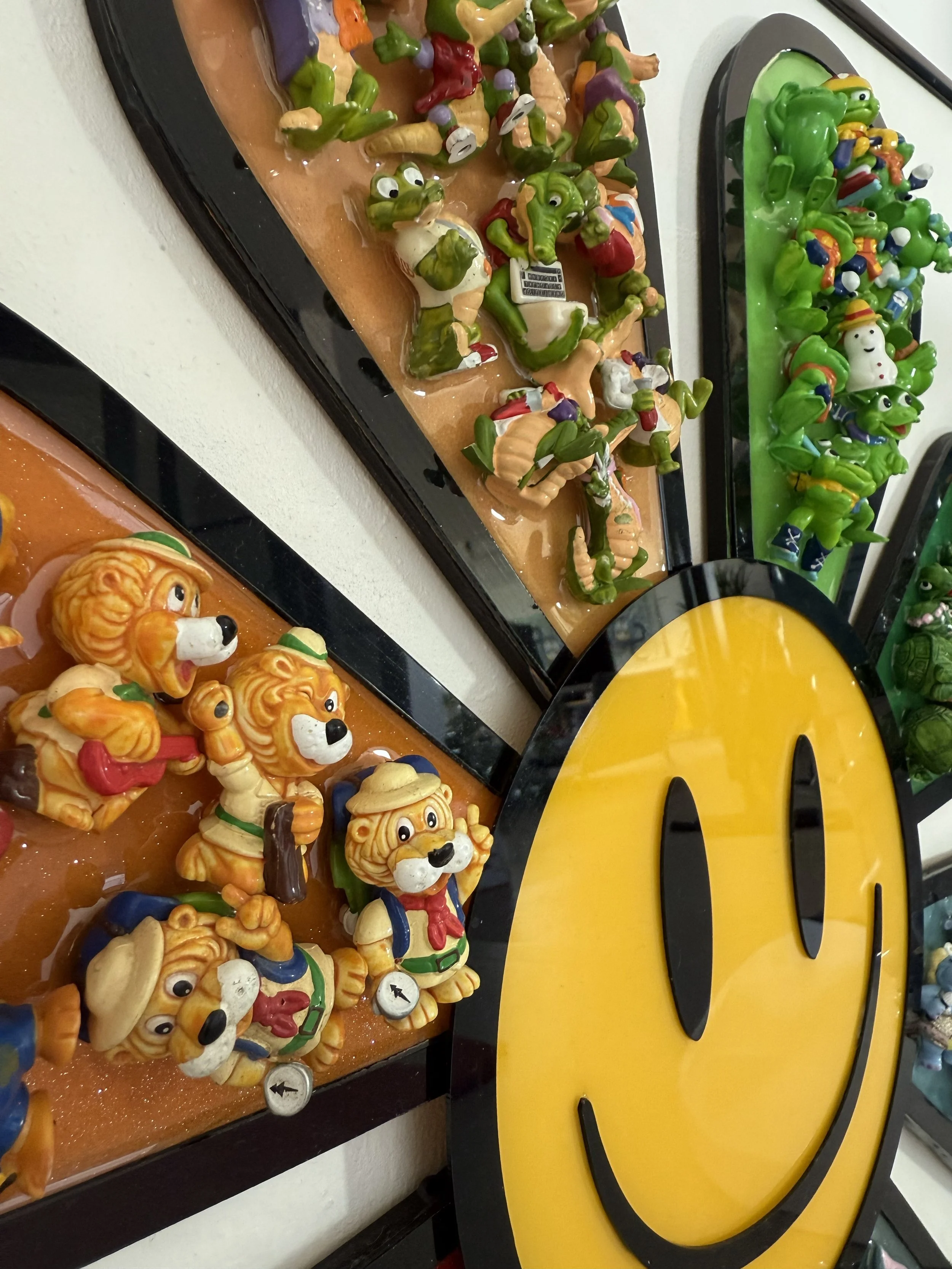
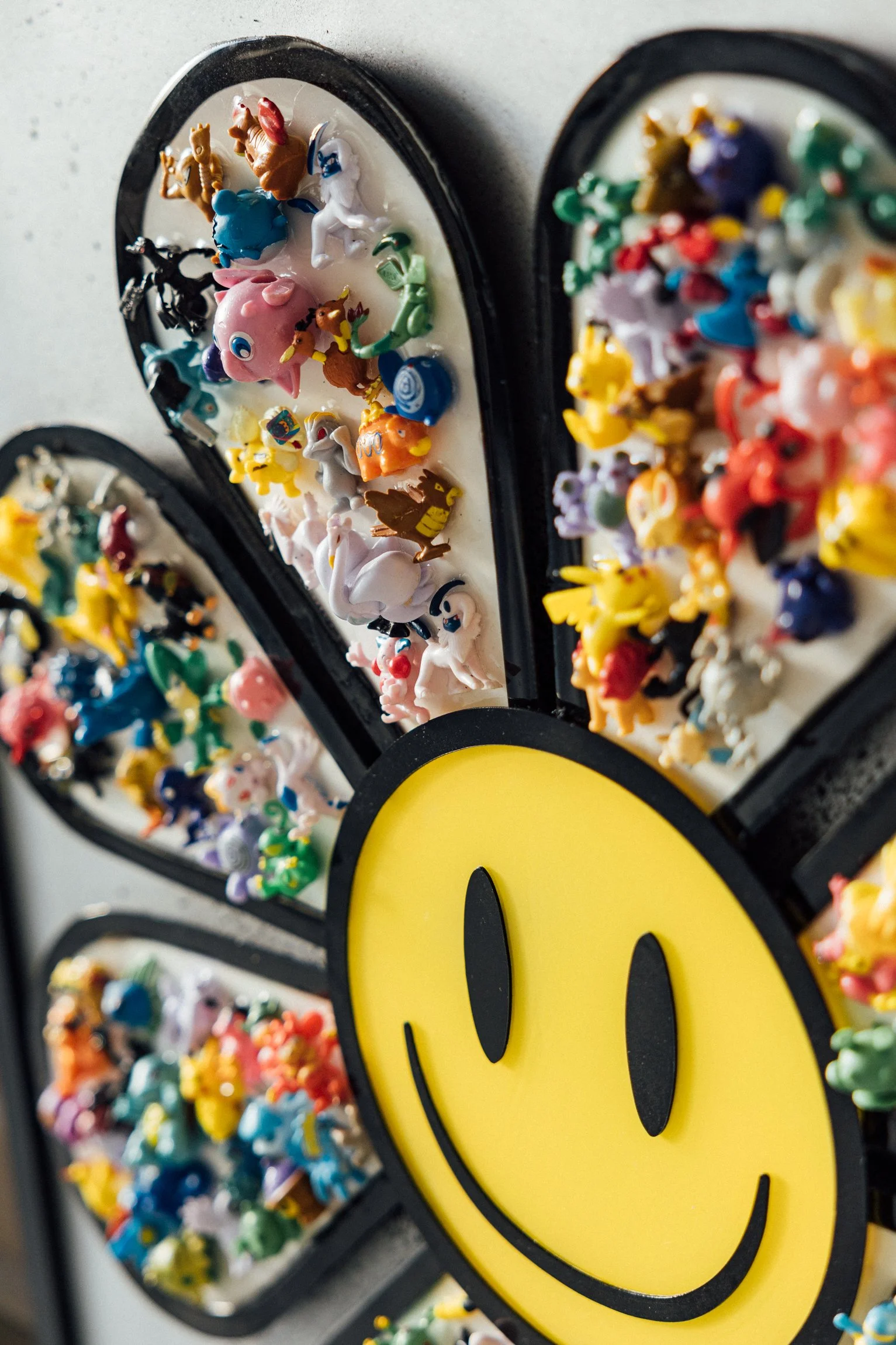
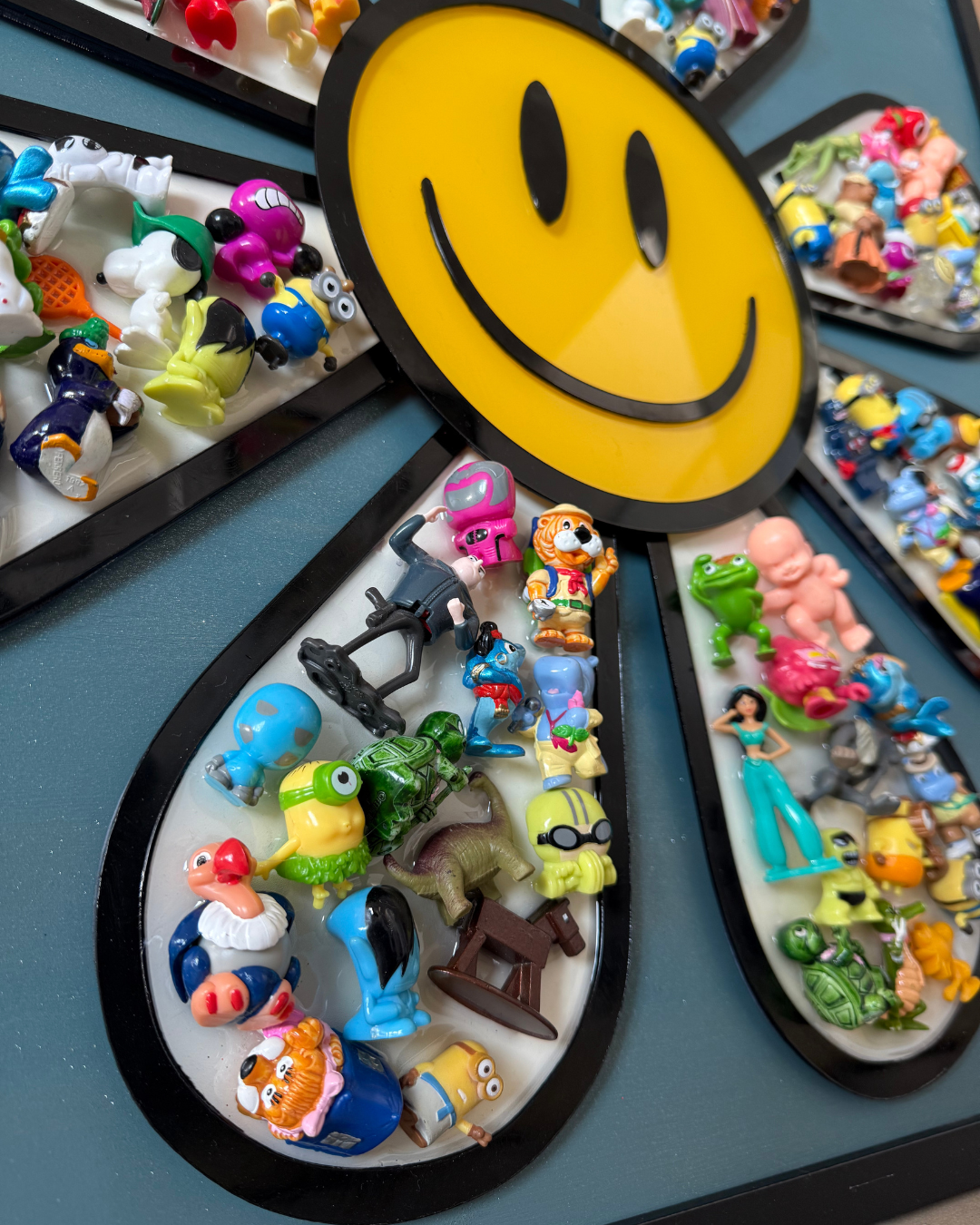
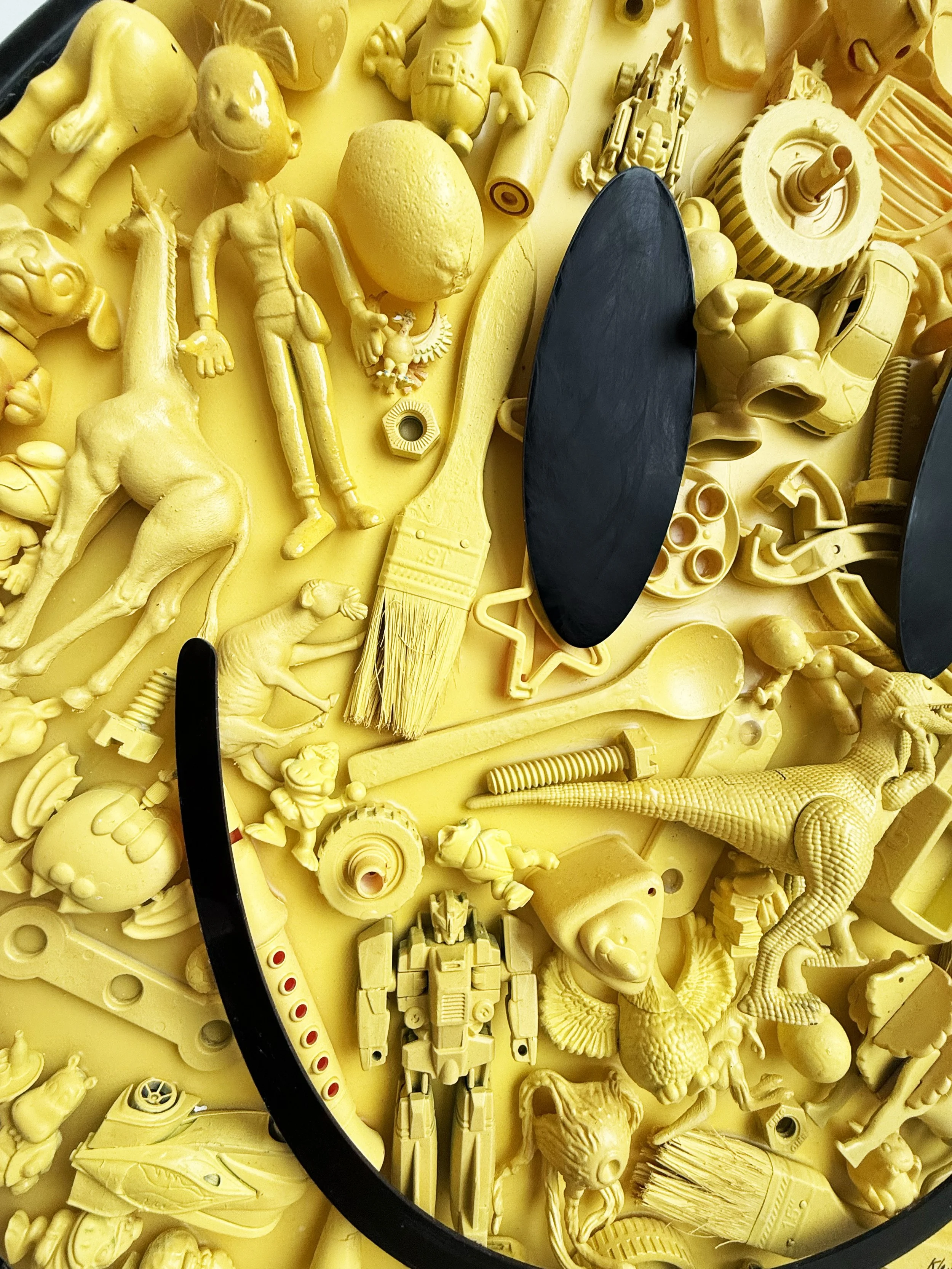
That’s exactly the kind of joy that artist Kat Vandal brings to the world through her “Happy Art” — vibrant, playful, memory-infused artworks made from upcycled childhood treasures.
Kat has an extraordinary gift: she transforms “ordinary” objects — packaging, clothing, toys, scraps of colour — into explosions of nostalgia and dopamine. Her pieces don’t just brighten a wall; they make you feel something. They remind you of who you once were… and maybe who you still are.
In today’s interview, Kat opens up about childhood creativity, the power of play, why she upcycles memories, and how reconnecting with your inner child can change the way you live, create and decorate.
So let’s dive in 💛!
👋 Meet the Artist: Kat Vandal
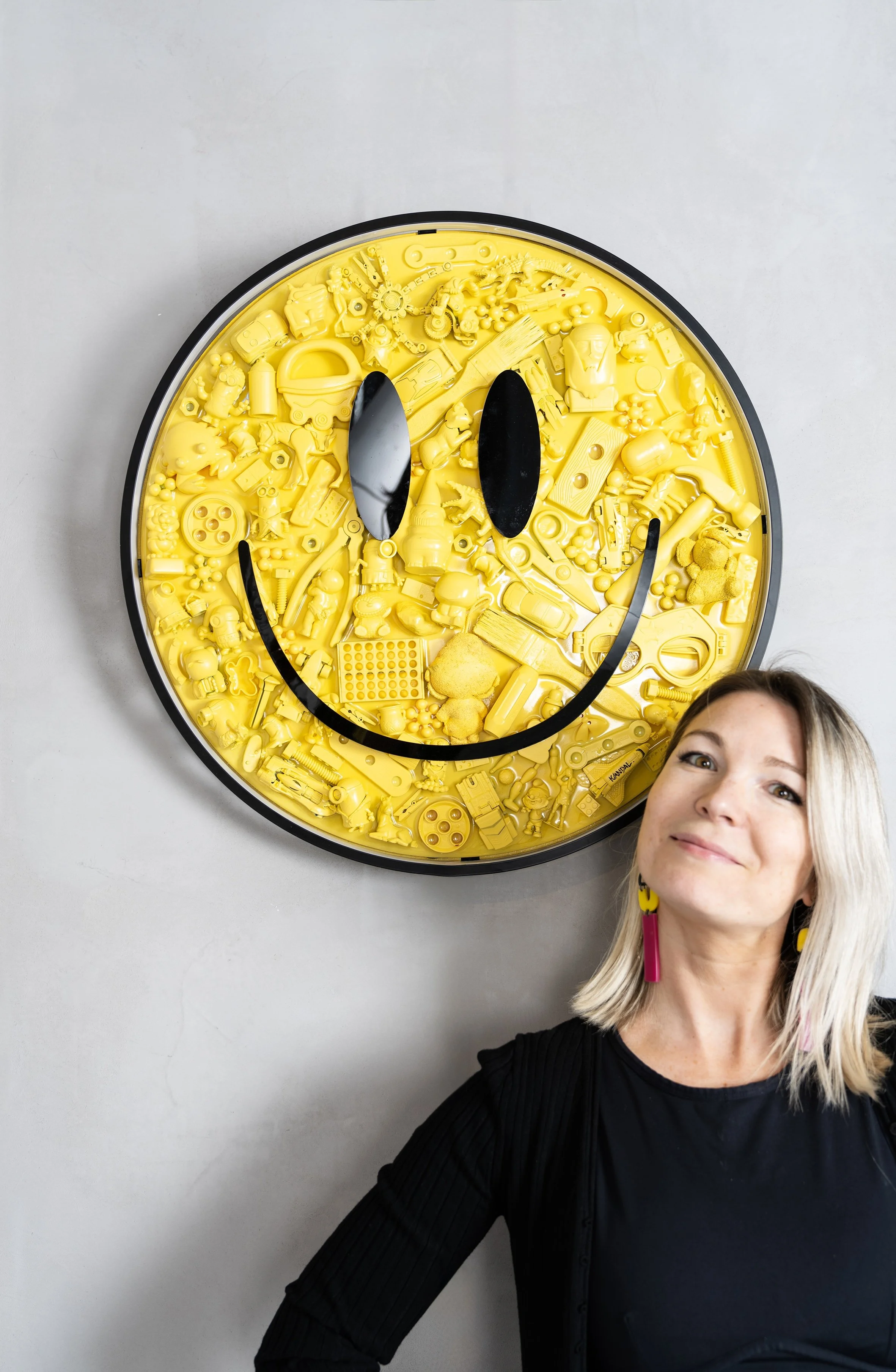
Kat Vandal is a London-based artist known for her bold, joyful aesthetic — a blend of 80s/90s Pop Art nostalgia, geometric shapes, raw textures, glitter, and unexpected childhood memorabilia.
Her work is deeply personal, rooted in memory, motherhood, and a lifelong instinct to transform the old into something magical. Kat grew up making dresses for her Barbies out of her mother's off cut fabrics, turning cardboard into props, and reimagining everyday objects into treasures. Today, she focuses on toys and other childhood objects, and calls this magic Happy Art — art designed to spark a smile, a memory, a rush of colour-fuelled joy.
In her artwork, childhood and adulthood meet as a deliberate duality: cheerful colours, playful chaos, and simple symbols paired with structure, edge and emotional resonance.
Instagram: @kat.vandal
Website: https://www.katvandalart.com/
✨ Born to Build, Not to Behave
How did your relationship with creativity start?
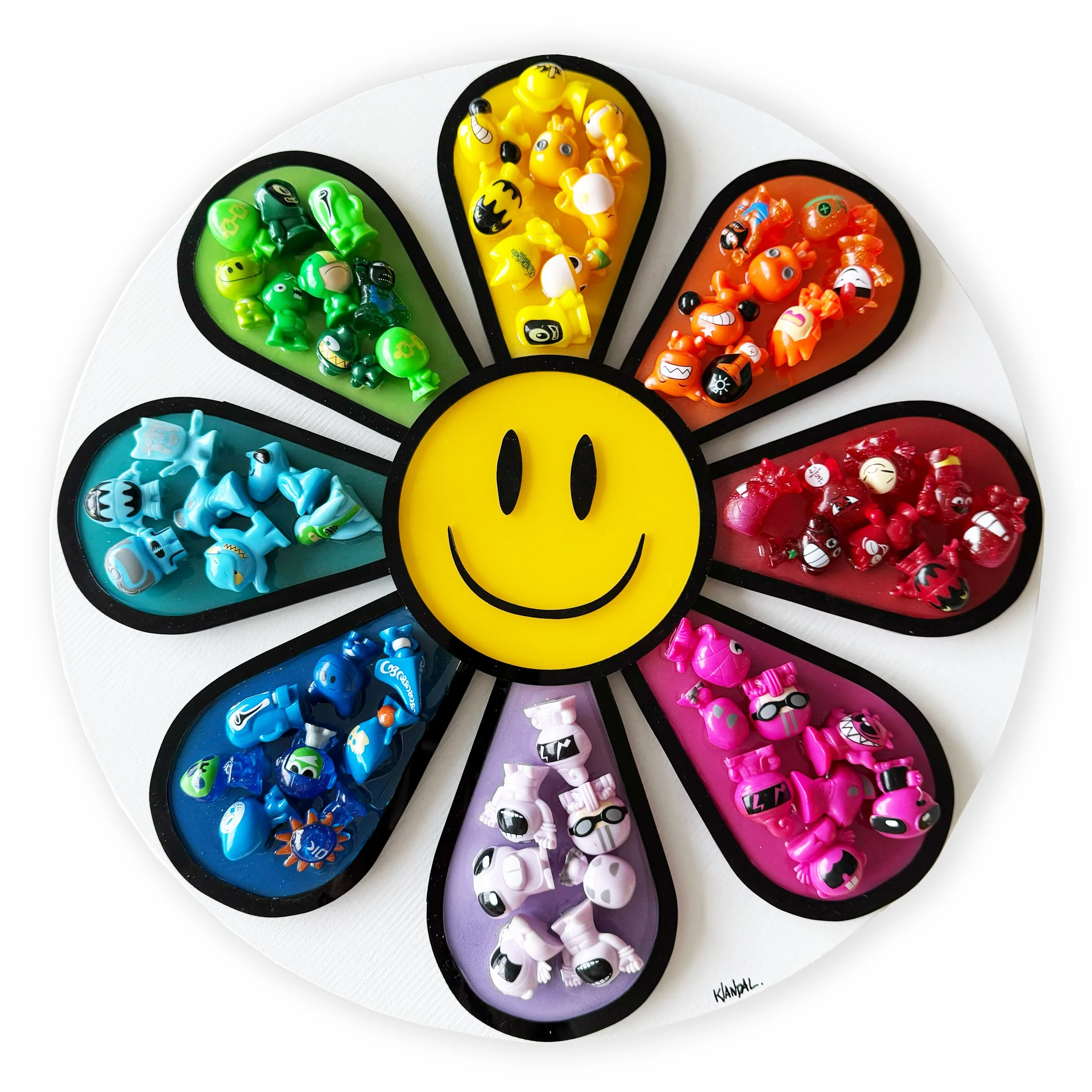
“Creativity started as my favourite escape as a child. I was always creating spaces, decorating, collaging, assembling everyday objects. More than drawing or painting, I was always drawn to the art of building and transformation. It felt like a superpower to me to transform something old, broken or boring into something beautiful or useful. It gave me a lot of satisfaction and comfort all at once. That instinct to create and transform never disappeared. I have always made gifts for family and friends and DIY-ing my way through life, it simply matured in the last few years into the joyful, memory-filled art I make today using toys and childhood memories.”
What inspires you today?
“I’m inspired by anything that blends joy, nostalgia and humanity — anything that reminds me how powerful small moments of happiness can be. I’m also obsessed with our brain and I love to educate myself on the science of happiness (dopamine, serotonin, oxytocin and all the hormones or tricks or habits that can help with our mental health). Something that really fuels me is the emotional reactions people share when they connect with my work, the childhood anecdotes they tell me.
But visually, literally anything can inspire me: Colours, shapes, objects (mainly toys at the moment but not just), memories, my son, street art, architecture,…”
Why is upcycling such a core part of your work?
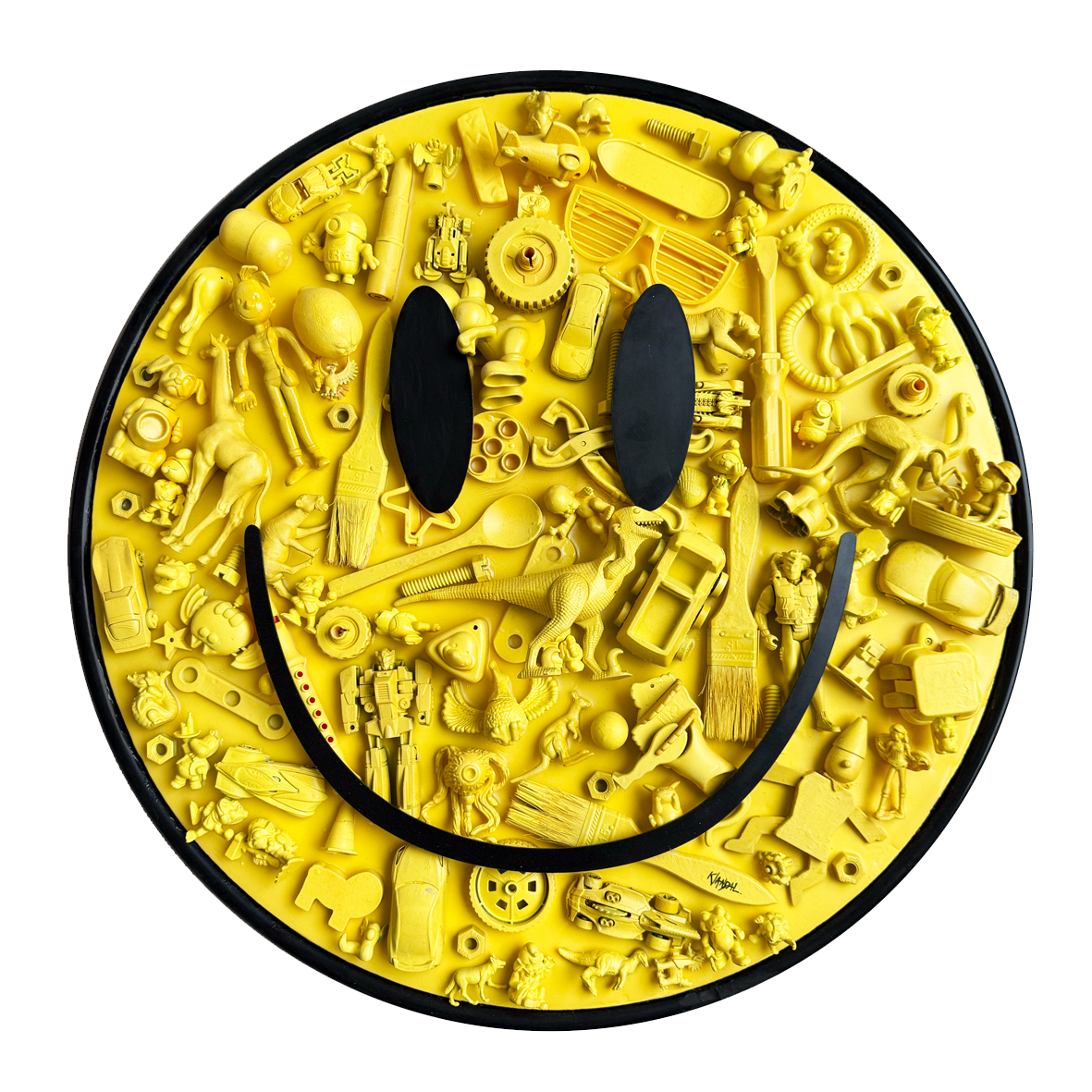
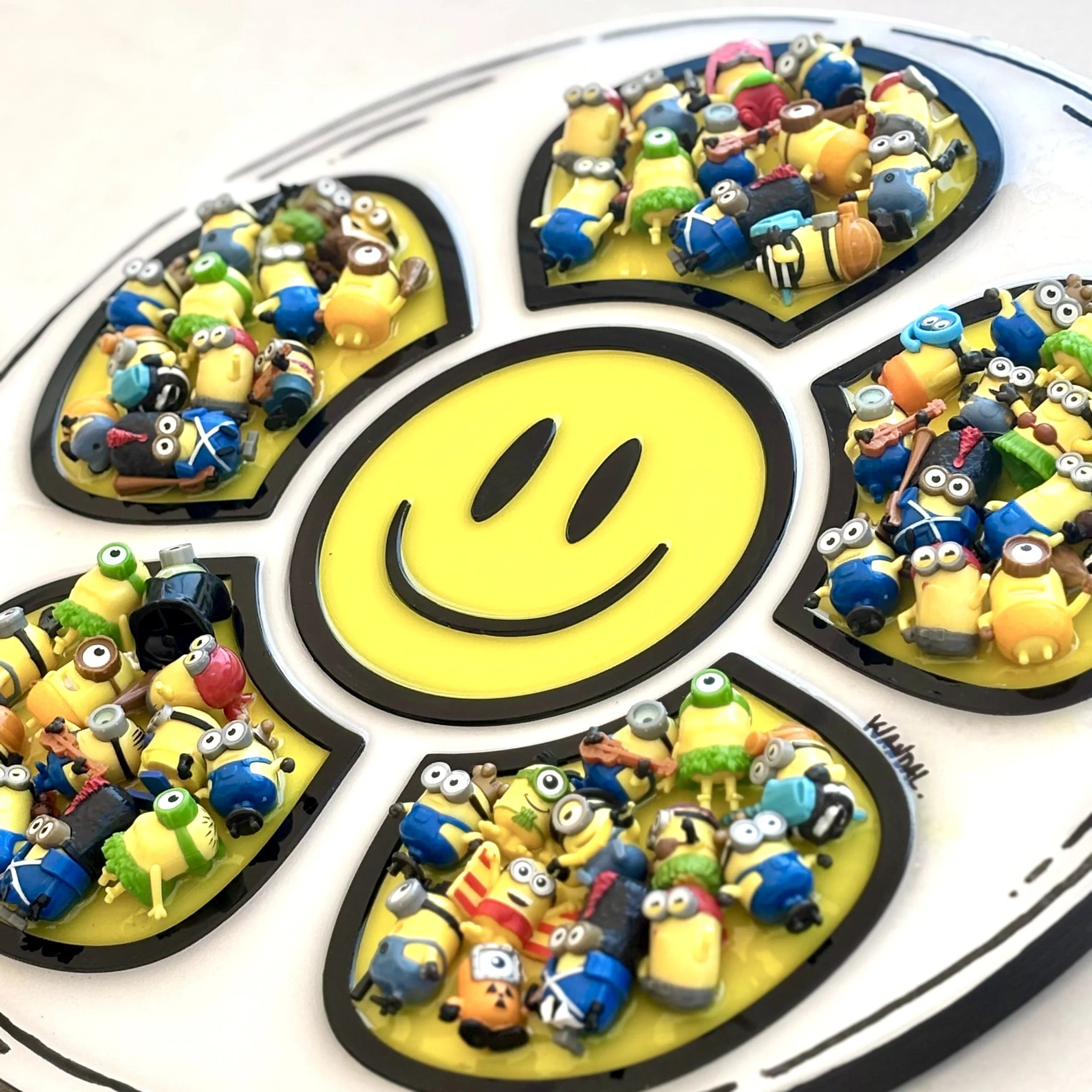
“Upcycling has always been a passion of mine, initially in the 80’/90’s, less aware about sustainability it was more the beauty of transformation and the 3D aspect that motivated me, I was much less interested in 2D art like drawing or painting. I liked to add depth to my art, shadow and light but also make it more tactile. As I grew up, I valued the sustainable aspect of the practice using everyday objects such as packaging, making disco balls from Actimel bottles, Neon lips with yogurt pots etc. It’s only more recently that I added a layer of memory and meaning through the story of the objects, with childhood objects that have such a short lifespan yet a lasting emotional imprint on people.”
👧 The Inner Child Never Left
Your art is full of childhood references, smiles, toys, glitter…When did the ‘inner child’ become central to your work?
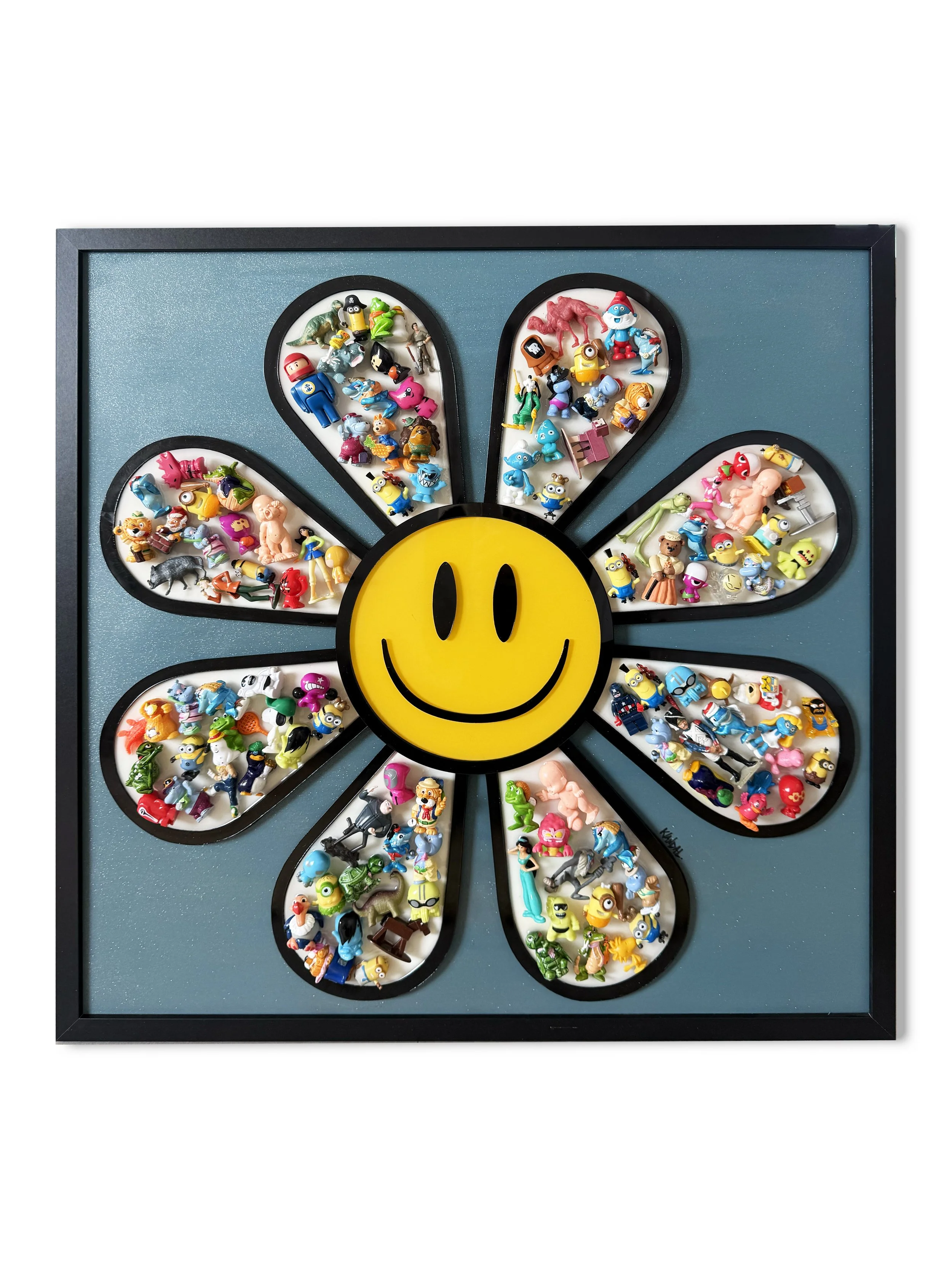
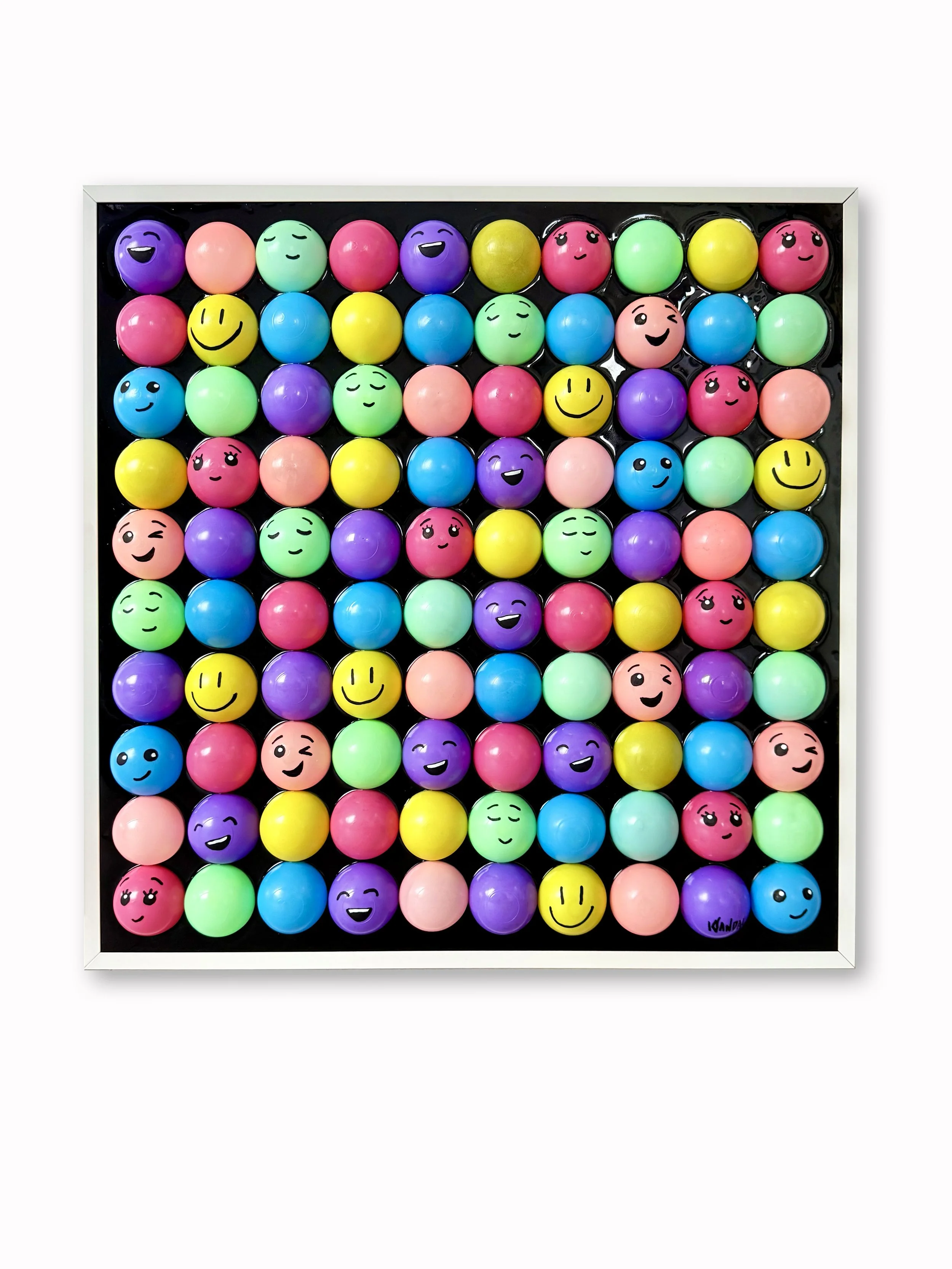
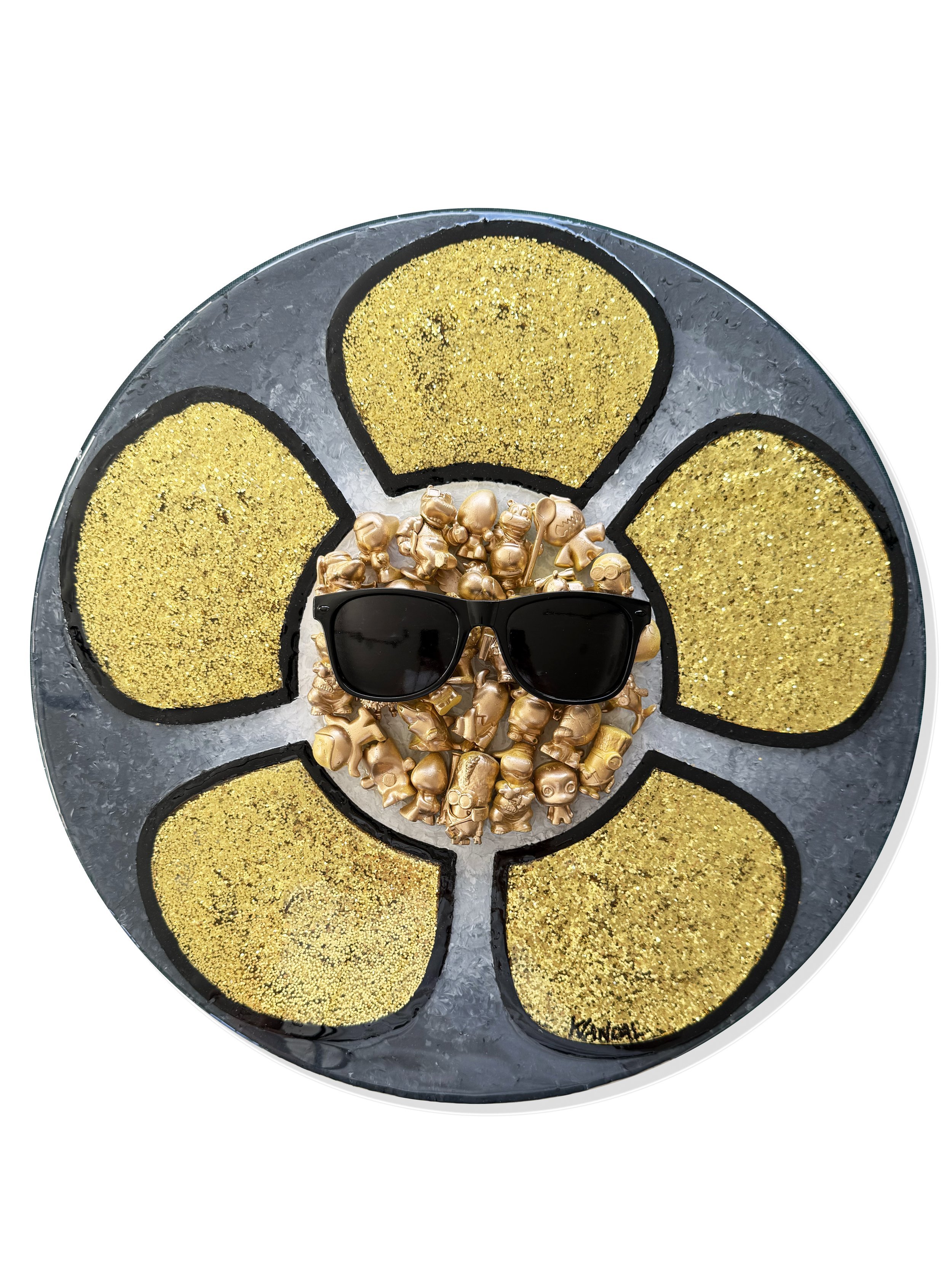
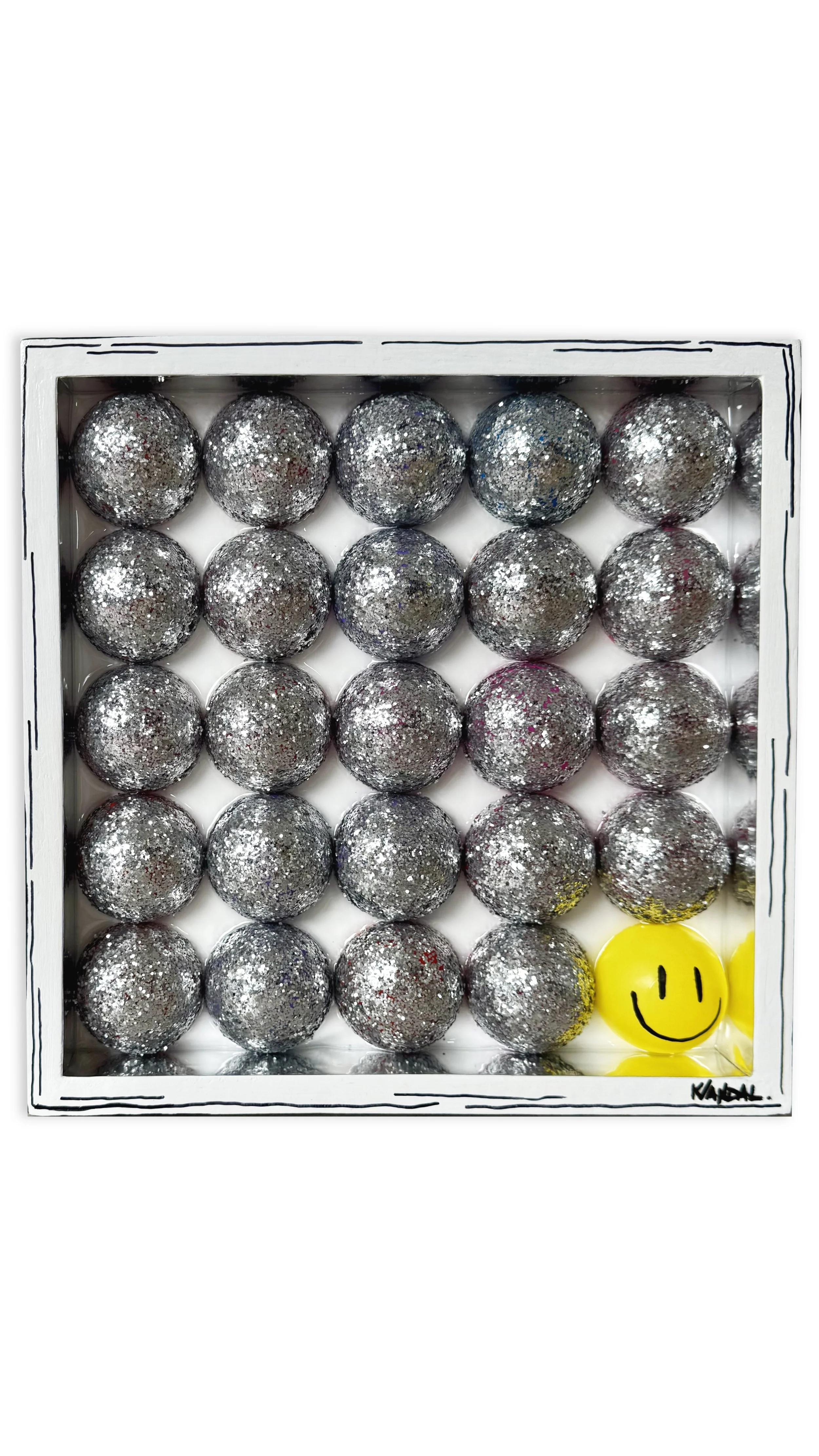
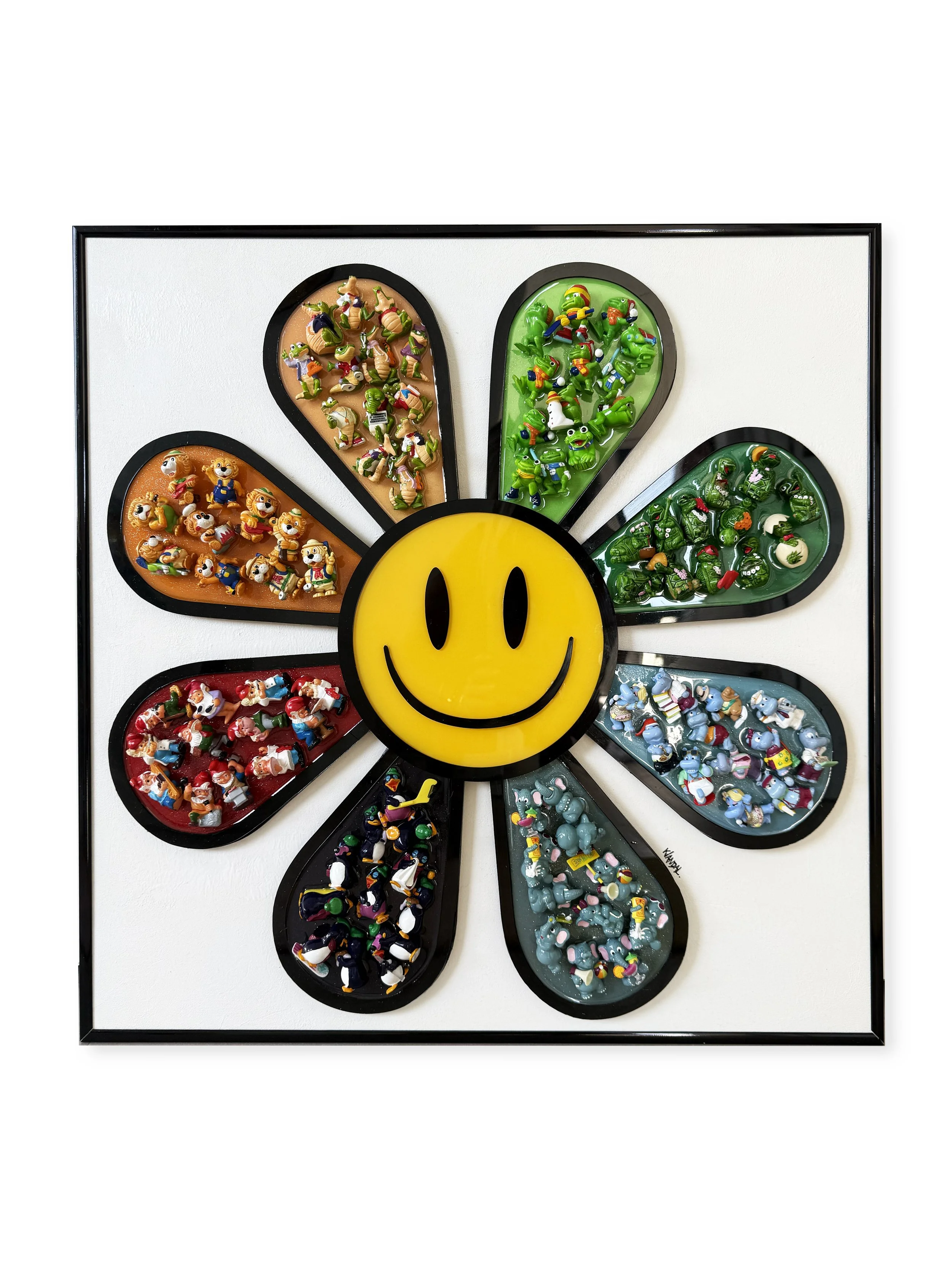
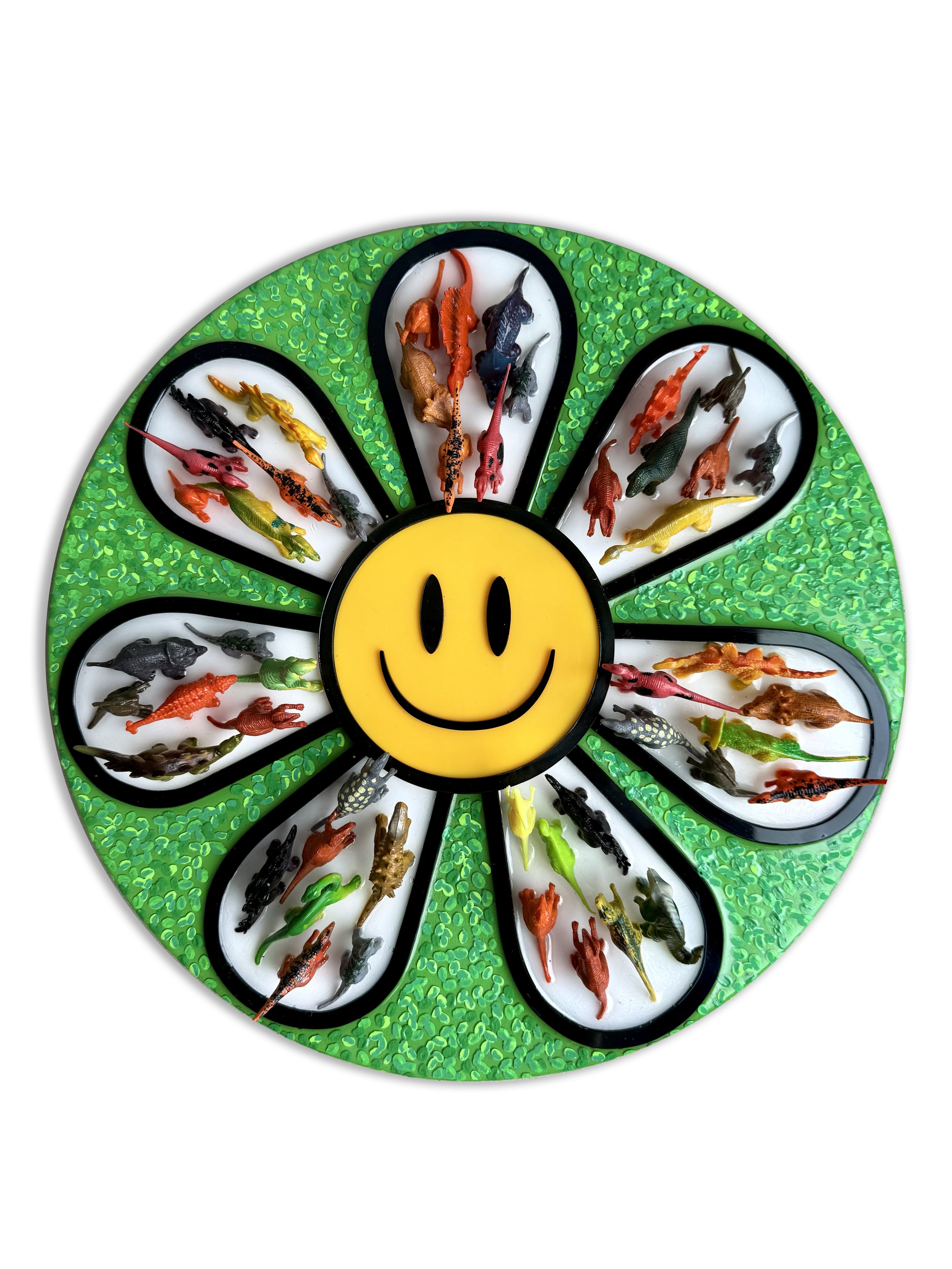
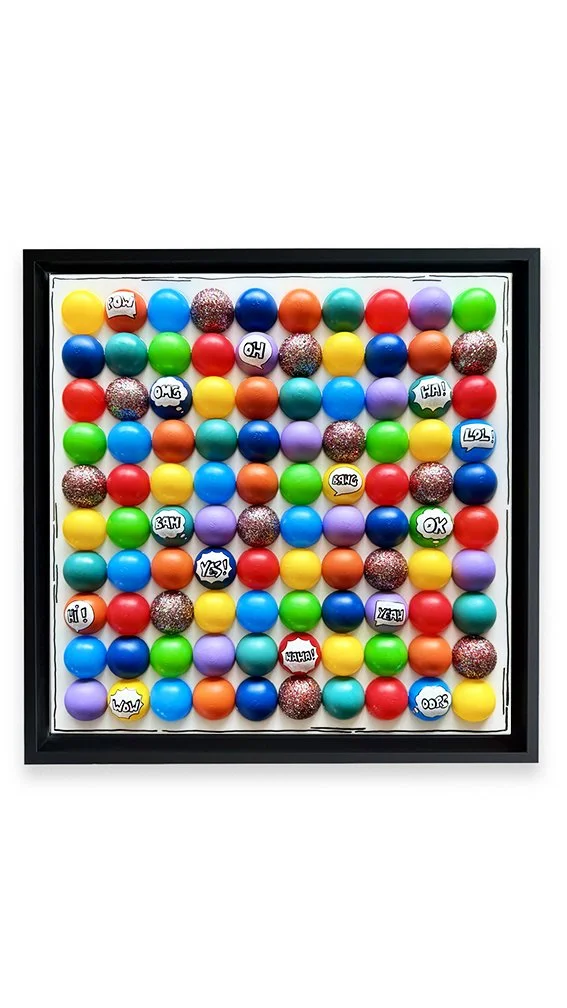
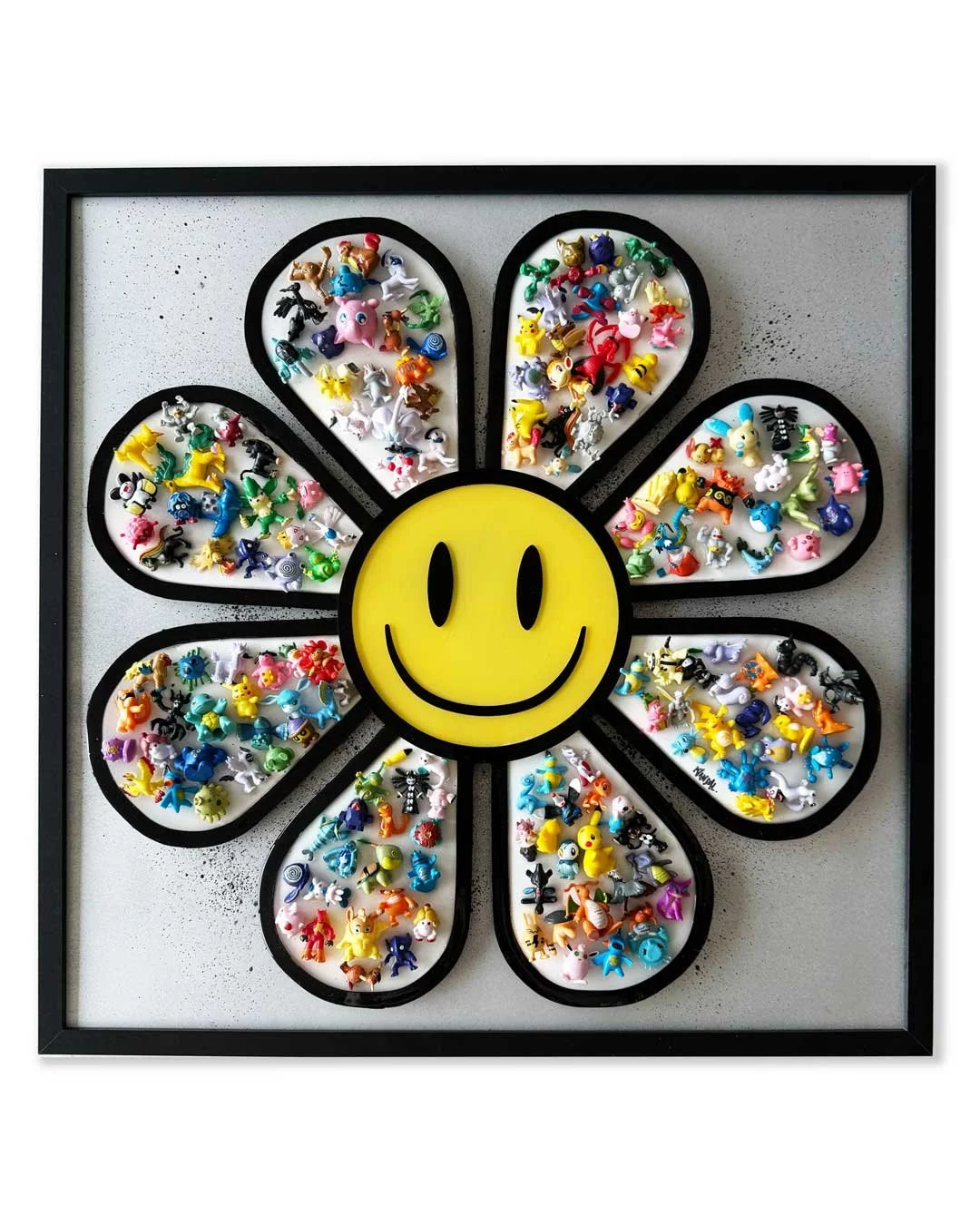
“It became central via my experience of motherhood and especially when my son turned 3-4 years old. Up until that age I felt more like a carer, the adult. But as we started to be able to play and create together, have more elaborate discussions and role plays, I became a child all over again, reliving my childhood through his. It gave me so much joy to buy toys and play with them (sometimes I wonder if I did it more for myself or for him like that pretend kitchen or doll house I had always dreamt of as a kid…) organise Christmas, birthday parties, be silly and rediscover simple joys. But with this, and the possibility for another kid fading, came anxiety around it being my 2nd and last chance at experiencing “childhood”. How could I prolong this or make it last forever became my obsession. That’s when I started collecting his toys after he stopped playing with them for a while and making art with them to eternalise his childhood on my walls gave me so much joy. ”
Why do you think we lose touch with our inner child as adults?
“As adults, and even as teenagers, we start worrying more and more about what other people think of us. So we stop being silly, we stop asking questions, we play a role to fit in the society, we think we need to be serious to be taken seriously. But also, we understand more the pain in the world, we develop a stress about life and responsibilities, all this takes a big part of our brain and leaves less time for playing and just being (with no agenda).
I don’t think our inner child disappears, it just gets buried under expectations and responsibilities. It’s wonderful to see how most adults can “become kid again” in certain contexts (going to Disneyland, jumping in a ball-pit, watching an old movie from their childhood), but I think we just don’t tickle this side of us enough.”
What message do you hope your Happy Art brings to people?
“More than a message, I hope my artworks give joy to people the same way they gave me joy to make them and continue to give me joy to look at them everyday. I also hope that it triggers happy memories from their own childhood or that of their kids because I really believe that a happy memories can stay in us forever and can keep making us happy as long as we can remember them with a light heart. Indeed, I think happy memories can either lift us up, or bring us down, depending on how we look at it and the mood we are in.
That’s why with my art, I purposefully remain playful and light. It’s not to say it lacks emotional resonance, but my goal being to transform melancholy into happy nostalgia, I’m choosing to do this with uplifting colours and cheerful symbols that will first bring a smile to your face, like a dopamine rush, a chemical reaction, to then put you in a more positive mood to experience the deeper connection to the piece, the one that can get you to dig deeper into your memories.”
🧩 Letting Play Back In
Can reconnecting with childhood memories influence how we decorate our homes?
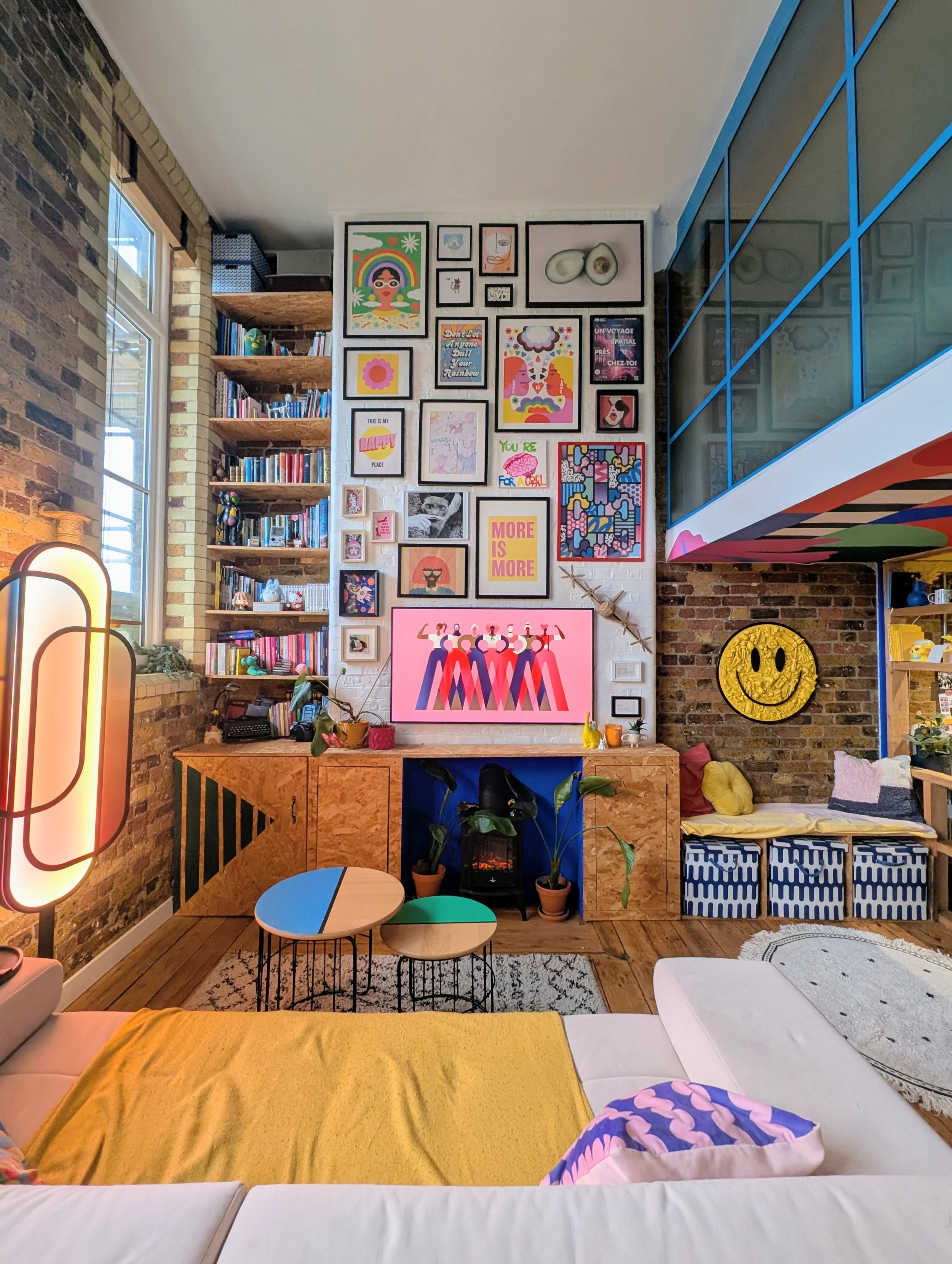
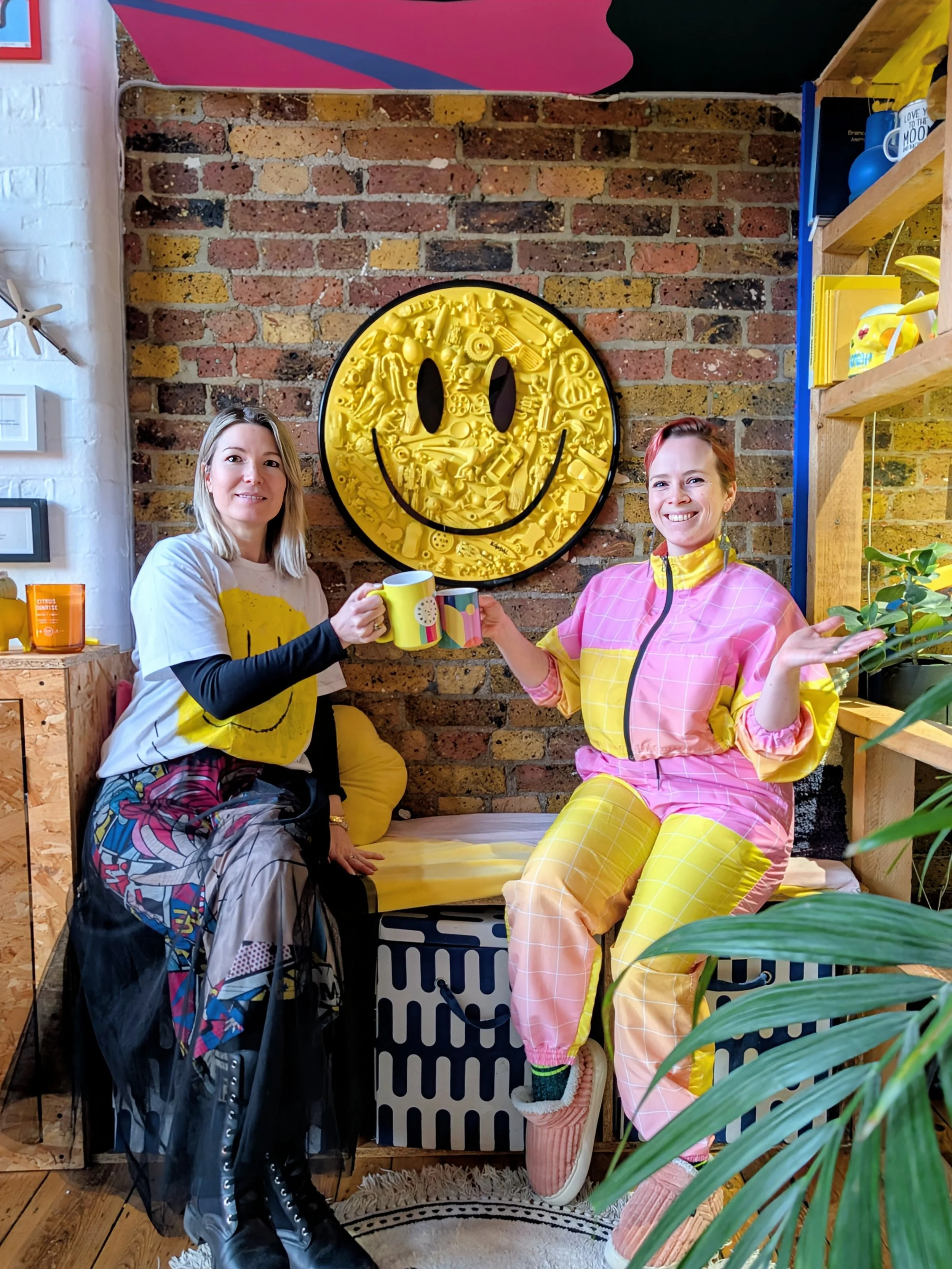
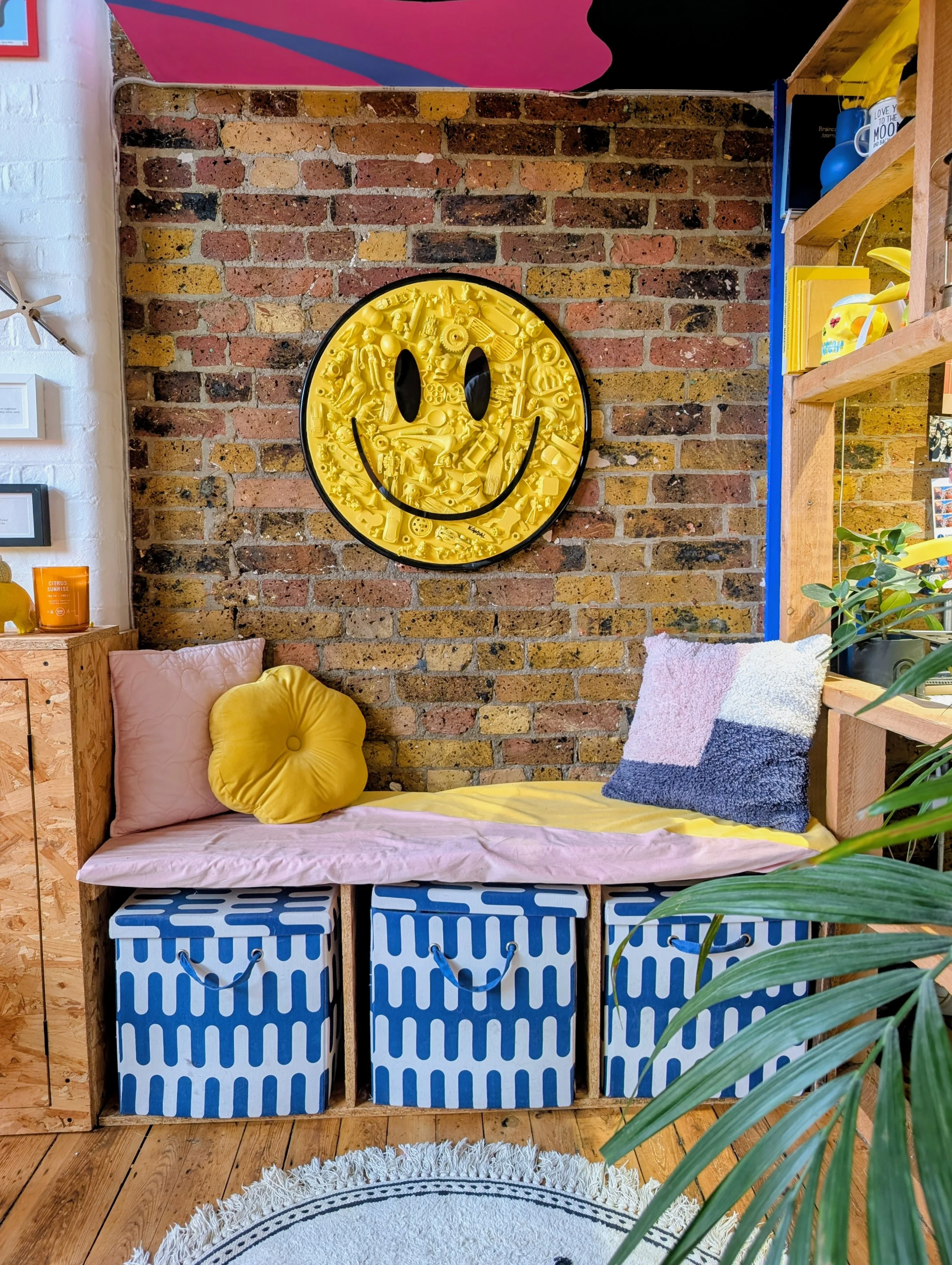
“Absolutely. When people tap into happy memories, they naturally choose colours, textures and objects that feel heartening and personal. Bringing nostalgia into interiors creates warmth and authenticity. It transforms a house into a home — a space that reflects who you are, not just what’s trending or “safe.” There could still be different ways it is done, some might associate childhood memories to playful, colourful decorations, some might associate it to some more pastels and soft shape, it might also be linked to a specific decade’s style too. Either way, it’s a wonderful way to keep a sense of continuity and comfort, in a home that might have changed due to moving or due to kids having left the nest.”
Practical ways someone can reconnect with their inner child through creativity?
“Give yourself permission to play without judging the outcome and if you have kids around you, observe them and try and level with them. Play with them or act like them.
Try a craft, eat a sweet or watch a movie you loved as a kid.
Look through old photos or toys and remember a happy moment as a child.
The inner child reappears when play and creativity becomes joyful exploration, not performance and when your senses are being tickled with childhood associated (smell, food, images, videos).”
🧡 Final words for anyone wanting to reconnect with their inner child?
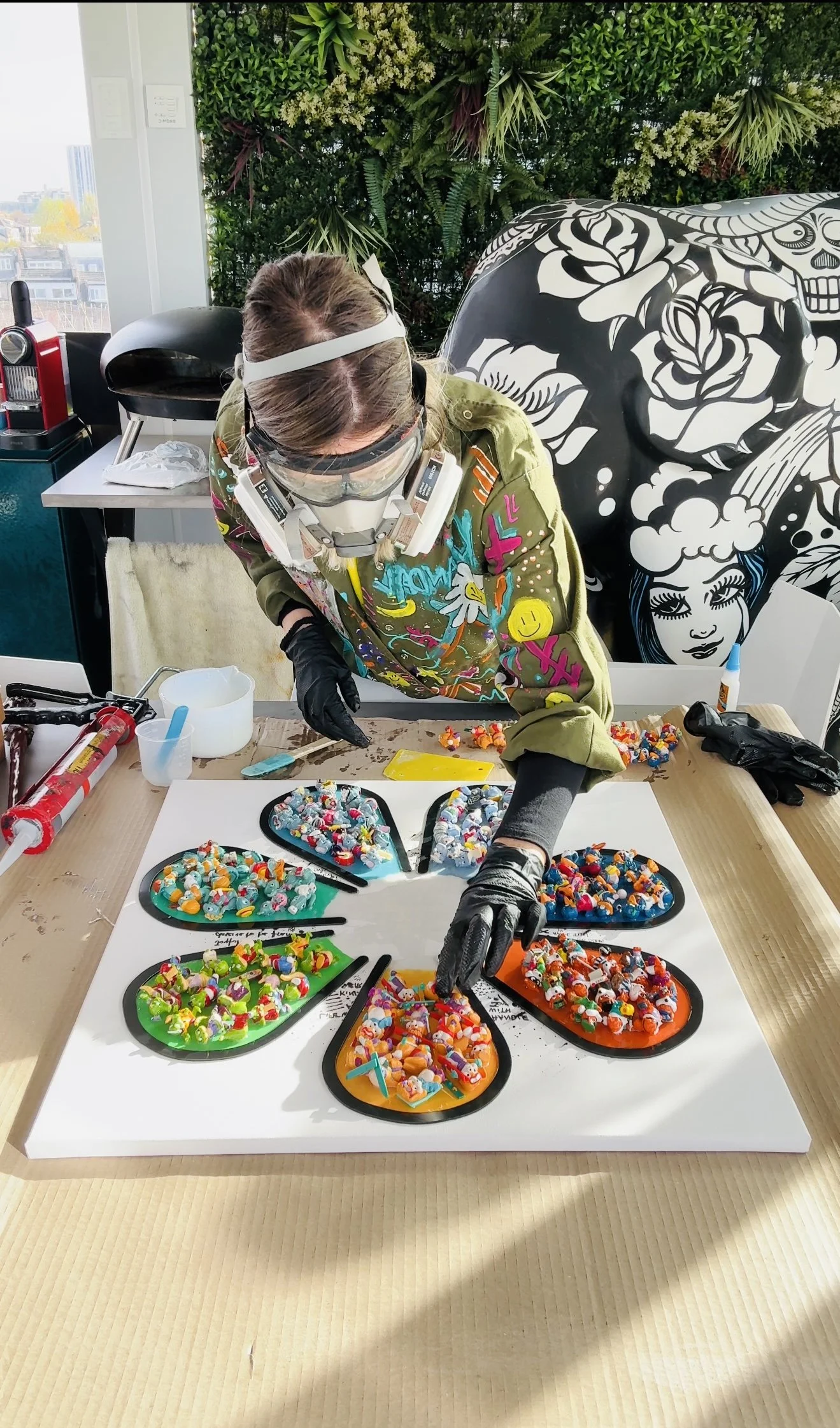
“I know that as adults we have responsibilities, we have bills to pay, we might have children to look after, we can be in a country at war, have all sorts of challenges and excruciating pain coming at us.
Reconnecting with our inner child won’t stop all of this, but it might give you a break once in a while, help you escape and forget a difficult situation, or it might give you fresh perspectives and ideas or a more cheerful and optimistic mindset that can help with how you deal with ordeals.
It’s free to practice and can be done anytime and anywhere. Just act like a kid from time to time, like no one is watching and see what happens…”
✨ Quick Recap: How to Reconnect With Your Inner Child
Here’s your creative mini-toolkit, inspired by Kat:
• Follow curiosity, not perfection
• Keep colours around you that spark joy
• Upcycle objects that hold emotional meaning
• Decorate playfully, not fearfully
• Create with your hands — collage, glue, draw, assemble
• Allow memories to guide your aesthetic
• Smile more. Seriously.
🧡 Ready to reconnect with your inner child?
If Kat’s story sparked something in you… let it grow.
She proves that joy, colour, nostalgia, and play aren’t childish — they’re powerful. They can transform your home, your creativity, and your mindset.
If you’re curious about bringing more colour, joy, and personality into your space, my course Colour Your Home Happy is the perfect place to begin.
✨ Bonus: Kat is offering an exclusive treat inside the course!
Let’s bring your joy back home — one bright colour and one happy memory at a time.